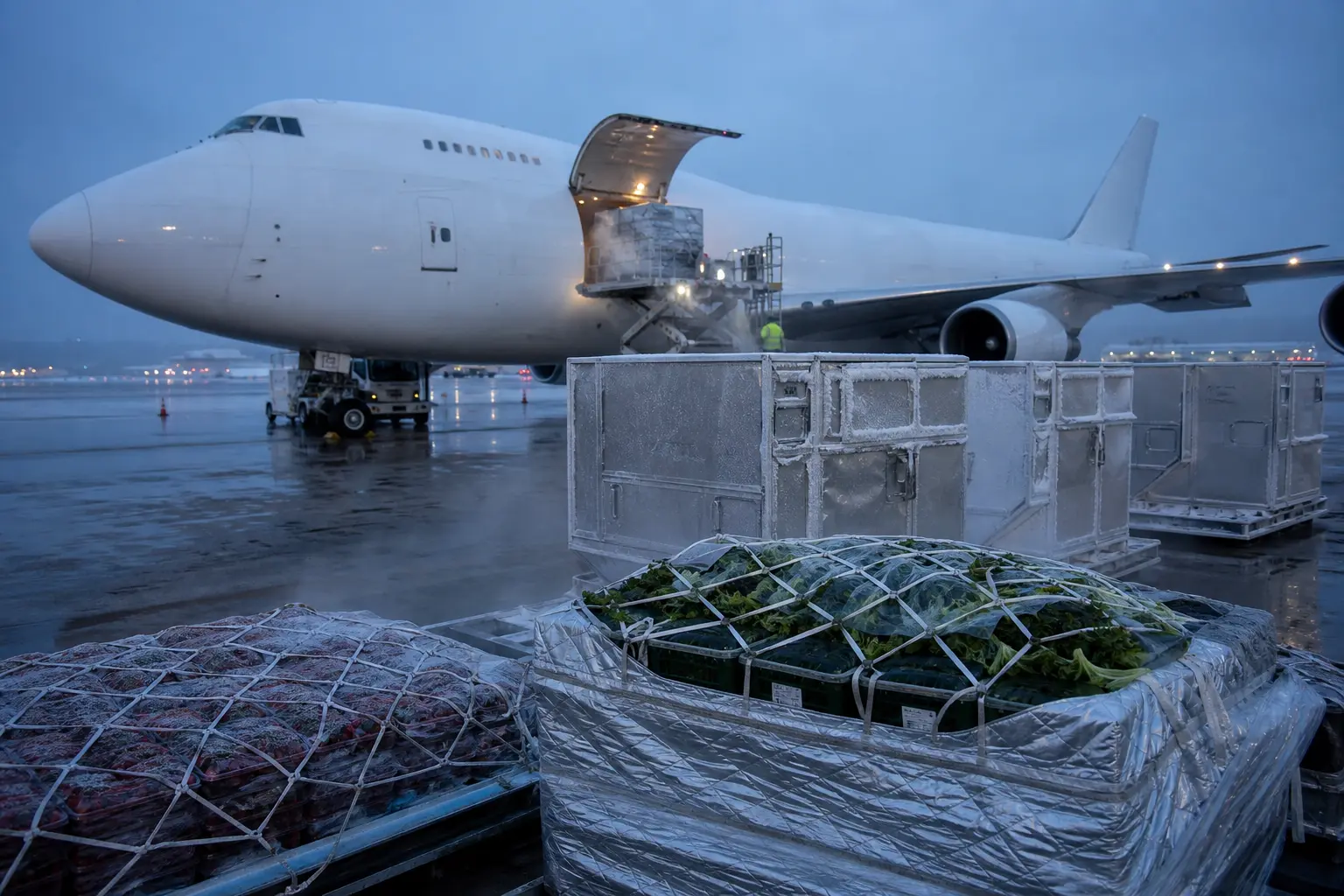
Perishable Air Freight Coordination
Coordination of time-sensitive perishable air cargo from booking through departure.
Perishable cargo loses value with every hour it sits outside the cool chain, so the routing and booking decisions made before a shipment ever reaches LAX matter as much as anything that happens after tender. FTE Perishable coordinates that front end of the movement — working between shippers, airlines, and handling agents so a shipment is booked on a routing that fits its shelf life, not just its price.
What's Included
- Review of shipment details (commodity, weight, volume, required temperature range) to identify suitable routings and connection times
- Coordination of space requests and booking confirmations with airline reservations and cargo teams
- Communication of cargo cutoff and acceptance windows so shipments are tendered within the airline's perishable handling timeline
- Coordination of temperature-controlled ULD, active cool-chain container, or cool-dolly requests where the airline offers them
- Monitoring of schedule changes, delays, or flight substitutions and coordinating rebooking when needed
Air carriers vary in how they handle perishable cargo — some publish dedicated perishable products or priority ramp handling, others require earlier tender times or specific packaging declarations before they will accept a booking. Part of our coordination role is matching a shipment to a carrier and routing that can actually support its temperature range and transit window, rather than assuming any available flight will do.
Cutoff and acceptance timing is one of the most common points where perishable shipments lose time. We track each carrier's required tender window for perishable cargo and coordinate with the shipper or their agent so documentation, labeling, and physical cargo are ready before that window closes.
Because we are a coordination service and not an airline, all flight operations, aircraft loading decisions, and hold temperature settings remain with the carrier. Our role is to make sure the booking, timing, and communication around that flight are handled correctly on the ground.
Frequently Asked Questions
What must be on the booking and air waybill for temperature handling — and what if it’s missing?
The booking and AWB handling information need the same Celsius temperature range, with labels that match. If temperature isn’t declared — or the booked service doesn’t support it — carriers often handle the shipment as general cargo. We coordinate that alignment before tender; we do not operate aircraft cold rooms or set hold temperatures ourselves.
When is a cheaper connecting itinerary too risky for perishables?
Each connection adds apron and warehouse dwell — usually the highest temperature-risk window in air freight. For short shelf life or passive packaging with a limited hold time, we prioritize direct or minimal-connection routings over the cheapest multi-stop option, and plan cool storage or rebooking if uplift fails. We coordinate the choice; we can’t control hub ramp times.
Related Commodities
This service is commonly coordinated for the following commodity types.
Have a Shipment That Needs Coordinating?
Share your shipment details and our LAX operations team will follow up with next steps.